
Written By: Kamara White
The Philadelphia Eagles dominated the Kansas City Chiefs in Super Bowl 2025, securing a 40-22 victory to claim their second championship. The Eagles’ performance was a complete team effort, with quarterback, Jalen Hurts leading the charge. According to ESPN, Hurts passed for 221 yards, threw two touchdowns, and added a rushing score to cap off his stellar game.
On the defensive side, the Eagles were relentless, sacking Chiefs’ quarterback Patrick Mahomes six times and intercepting him twice. One of the interceptions was returned for a touchdown by rookie Cooper DeJean, further cementing the Eagles’ commanding lead. The Eagles’ defense continuously disrupted Mahomes’ rhythm in the pocket, and the pressure ultimately proved too much for the Chiefs to overcome. This win ended Kansas City’s bid for a third consecutive Super Bowl title, while Philadelphia celebrated a historic triumph.
While the game itself was filled with excitement and a dominant performance by the Eagles, it was clear that much of the anticipation surrounding Super Bowl 2025 was centered on the highly promoted halftime show. For many Kendrick Lamar fans, the game felt like a bonus while waiting for the 22-time Grammy winner to take the stage. Kendrick Lamar’s electrifying performance captivated the audience with its powerful imagery and symbolic messages.
In an era where pop culture is increasingly intertwined with social justice movements, Kendrick Lamar’s halftime show was relevant to this concept. As political and social unrest continue to dominate headlines, Lamar’s performance is a creatively and symbolically depicted call to action. It reminded viewers that music and pop culture can be both celebratory and note that artists or those with influence have a responsibility to speak up about societal injustice.
The production and setlist was a meticulously crafted blend of art, activism, and hip-hop culture. The Pulitzer Prize-winning rapper’s setlist was a specifically curated selection of his most powerful tracks, taking the audience through a thematic exploration of identity, resistance, and resilience in America.
Opening with Squabble Up, Lamar set the tone with a hard-hitting track that encapsulated his reflections on heritage and societal expectations. This was followed by HUMBLE, where Lamar’s message of self-awareness and critique of the celebrity culture took center stage. Lamar’s choice to include tracks like DNA and Man At the Garden critiqued not only political structures but also the media’s role in shaping public perception in an era of viral activism and social oppression. Lamar performed Not Like Us, which won Record of the Year at the Grammy’s last week highlighting the unity of hip-hop culture and individuality (but also a diss track, as we all know). Lamar finally closed the show with TV Off, emphasizing the action to “turn off” the propaganda of the media that is not always accurate.
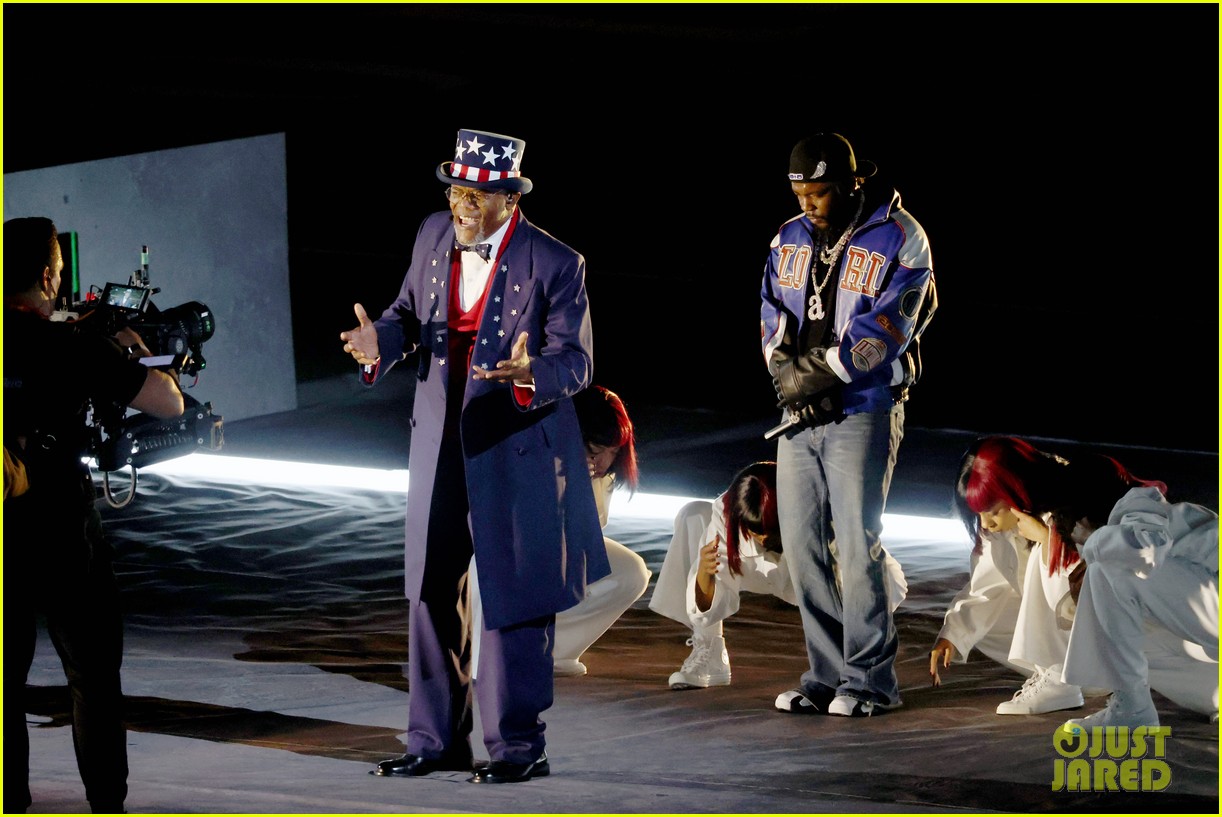
Other songs performed were: Euphoria, Peek-A-Boo, Luther feat. SZA, and All the Stars feat. SZA. This setlist not only showcased Lamar’s evolution as an artist but also served as a narrative thread weaving together the complex themes of power, resistance, and Black identity. Visually, the show was a masterpiece of imagery and symbolism. The towering figure of a statued Uncle Sam was shown throughout the performance, as a representation of American capitalism, control, and resilience providing a powerful counterpoint to Lamar’s messages of freedom, individuality, and racial justice.
Beyond the figure of Uncle Sam, other elements of the stage design played key roles in reinforcing Lamar’s message. The color palette of the performance of red, white, and black echoed the symbolism of American identity and power, especially in the beginning when the dancers were positioned to replicate the American flag.
The choreography was just as intentional as Lamar’s lyrics, with dancers moving in sharp, synchronized formations that mirrored the themes of societal control, oppression, and resistance. At key moments, the dancers broke free from rigid movements, representing liberation and individuality, amplifying Lamar’s message of breaking free from systemic oppression.
The recurring figure of Uncle Sam posed by guest star, Samuel L. Jackson was a potent metaphor throughout the performance. From the opening sequence to the final moments, Jackson’s dialogue as Uncle Sam reflected the systems and media’s perception that exploit and suppress marginalized communities.
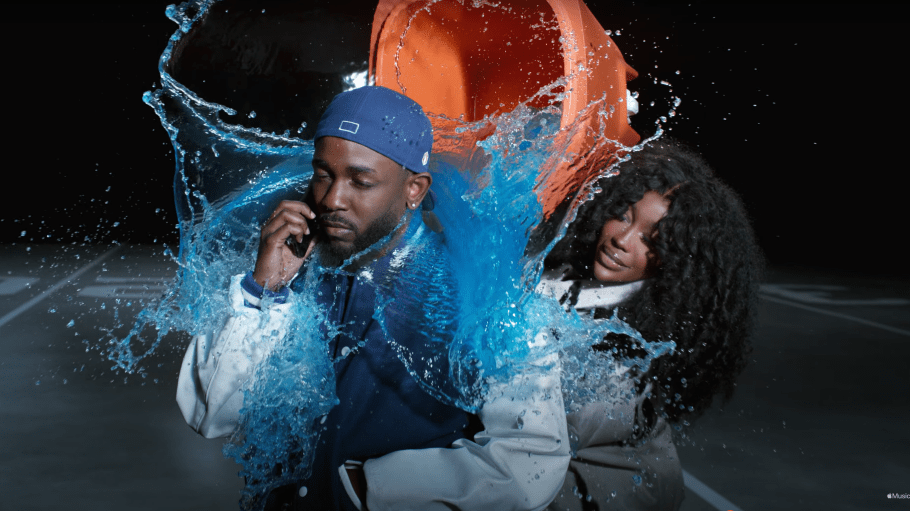
Although Lamar could have commanded the stage solo, his decision to include guest stars in addition to Jackson, was a nod to both musical legacy and political solidarity. Among them, SZA joined him for a powerful rendition of All The Stars from the Black Panther soundtrack and Luther, from his GNX album. Their chemistry showed as they have been preparing to go on tour together starting in April 2025. Influential black stars in the industry, DJ Mustard and Serena Williams also joined the stage towards the end of Lamar’s 13-minute setlist for Not Like Us, dancing to the hit.
The audience’s energy shifted as the performance progressed, with cheers reaching their peak when guest stars appeared on stage. The crowd’s roar when SZA appeared was a testament to the anticipation for their collaboration and the singing of lyrics in unison throughout the stadium.

His seamless blending of music, political commentary, and visual storytelling left an indelible mark on the audience, offering both a critique of America’s systems and a message of hope for its future. Lamar’s artistry, rooted in truth and justice, has proven that he is not only a performer, but he is a voice of a generation.
Kendrick Lamar has always been known for the layering of meaning in his work, and this halftime performance was a prime example. Every element was intentional and gave a great message by letting his music pave the way for him. In a world that often shies away from difficult conversations, Kendrick Lamar stepped onto the biggest stage in sports and got the audience to listen. And in doing so, he created a halftime show that will be remembered not just for its music but for its message.
 The Belltower