
Written by: Kamara White
In a society that has gradually started to become driven by appearances, “pretty privilege” has become more evident, quietly influencing social hierarchies and creating biases throughout time.
Pretty privilege refers to the advantages that people deemed conventionally attractive receive, whether it’s biased preference, easier access to opportunities, or accumulation of free materialistic items. On the surface, this may seem like a clear benefit. Who wouldn’t want a free cup of coffee, VIP event access, or a little favor in the workplace? However, a deeper look reveals that privilege comes with significant downsides, especially when it reduces people to objects of desire, making it difficult for them to be seen for who they truly are.

This phenomenon, explored in psychology and personal stories, skews society’s dynamics and affects the folks who get the benefits. By putting a magnifying glass on external beauty, society risks reducing people to mere eye candy, leading to isolation and loneliness, and reinforcing the same old harmful gender stereotypes.
One of the heaviest effects of pretty privilege is its ability to transform a person’s self-image into an object of desire, valued for their looks rather than their inner qualities, talents, or intelligence. Research from the Journal of Personality and Social Psychology suggests that attractive people—especially women—often get objectified, meaning their abilities are dismissed because people can’t look past their appearance. This is what sociologists call “the beauty paradox” –the idea that attractive people benefit from their beauty but often suffer from not being seen as whole individuals.
Actress and well-known model Emily Ratajkowski reflects on how being perceived as attractive has shaped both her career and personal life in her memoir, My Body. In the New York Times best-seller, Ratajowksi discusses how her appearance, rather than her talent or opinions, often took center stage in interactions with others.
Ratajkowski writes, “I’ve been taught to believe that my body is more important than what I think, or who I am,” as stated from her novel (My Body, p. 102).
This constant gaze made her feel like an object of desire, even as she sought to assert her ideas and identity. Over time, she began to question whether people were genuinely interested in her as a person or simply in her looks. While Ratajkowski’s story stems from her public life, the trap of pretty privilege is one shared by many, even those in their daily lives. While attractive individuals may receive more attention, it can often feel shallow and alienating. Instead of being celebrated for who they are, they are seen primarily for what their physical appearance offers.
Although both men and women can experience pretty privilege, objectification tends to affect women more. According to the Objectification Theory by Fredrickson and Roberts (1997), societal norms disproportionately objectify women, linking their value to their physical attractiveness. This heightened objectification leads to various mental health risks, emphasizing how the downsides of pretty privilege, such as being reduced to appearance, impact women more significantly than men.
The pressure to conform to societal beauty standards, combined with the tendency to reduce attractive women to objects of desire, reinforces harmful gender norms. A 2019 study published in the Journal of Experimental Social Psychology found that women perceived as attractive are more likely to face objectifying gazes and remarks, which can lead to lower self-esteem and a diminished sense of agency.
The #MeToo movement shed light on the darker side of pretty privilege. Countless women in entertainment, media, and other industries shared stories of being harassed or mistreated because of their looks. This objectification often creates a toxic environment where women feel pressured to maintain their beauty for fear of losing opportunities, while being treated as mere commodities rather than respected professionals.
For those who benefit from pretty privilege, the constant emphasis on physical appearance can lead to a disconnect from their true identity. People focus more on what’s on the outside, leaving inner qualities—like intelligence, kindness, or creativity—overlooked or undervalued. Over time, this creates a deep sense of loneliness and self-doubt, as individuals struggle to believe that anyone cares about them beyond their appearance.
Former Victoria’s Secret model Bridget Malcolm shared in a 2021 TEDx Talk that despite being celebrated for her beauty, she felt an overwhelming sense of emptiness.
Malcolm expressed in her TedxTalk that “…People would look at me and see the model, but they never looked deeper. They never asked me what I thought or how I felt.” This specific struggle of disconnect led Malcolm to years of struggling with mental health issues, including eating disorders and depression, as her true self felt invisible behind society’s expectations.
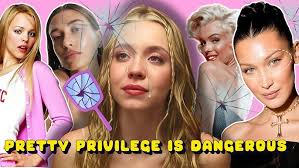
The rise of social media has intensified the effects of pretty privilege, turning physical appearance into a commodity. Individuals, particularly women, often face unwarranted attention or objectification simply because of a picture or video posted online. This reinforces the notion that they are objects of desire to viewers rather than individuals with unique thoughts and personalities. Platforms like Instagram and TikTok have normalized this phenomenon, where a single image can attract an influx of comments and direct messages based solely on looks. This further distances people from being seen for who they truly are both on social media platforms and in society.
A study published in Computers in Human Behavior (2016) found that attractive individuals on social media receive more likes, comments, and messages, but they also report higher levels of objectification. This constant exposure to comments on physical appearance can diminish self-esteem and create a sense of being valued only for looks rather than talents or character. Social media interactions, much like offline ones, can feel transactional, focused on outward beauty rather than meaningful engagement for on individual’s core self.
A more relatable construct of pretty privilege that happens on the daily basis out in public is how it can make women feel unsafe or violated in public spaces. Women often find themselves the targets of catcalling, unwelcome advances, or even harassment simply because they are perceived as attractive. What may be framed as a compliment can quickly become a threat to safety with rejection, leaving women feeling exposed and vulnerable. These encounters often reinforce the idea that a woman’s worth lies solely in her appearance, adding to the objectification and dehumanization many already face. The constant fear of being harassed or hit on in public can make it difficult for women to navigate everyday life without feeling as though they must constantly be on guard,which inhibits their sense of freedom and autonomy.
In many cases, pretty privilege can feel transactional, as author Jia Tolentino noted in an essay for The Atlantic, a credible national publishing magazine. When people receive attention and rewards solely based on their appearance, it distorts their sense of self, making it harder to form genuine connections. In relationships, this often manifests in individuals being treated like trophies or status symbols, valued primarily for their looks rather than who they are as people. This constant reinforcement that one’s worth is tied to their appearance can be mentally exhausting and damaging, leading to insecurity and self-doubt.
While pretty privilege may seem like an advantage in today’s image-driven society, its downsides are significant and often deeply felt. The emphasis on physical appearance leads to objectification, gender-based biases, and a disconnection from one’s true self. As we continue to explore the implications of this privilege, it’s essential to remember that a person’s worth is far more than skin deep. Valuing people for who they are rather than what they look like is key to building a society where everyone can feel seen, heard, and respected for their inner qualities.
 The Belltower